.jpg)
byDr Stavros Kelogrigoris Paphos Dental Clinic
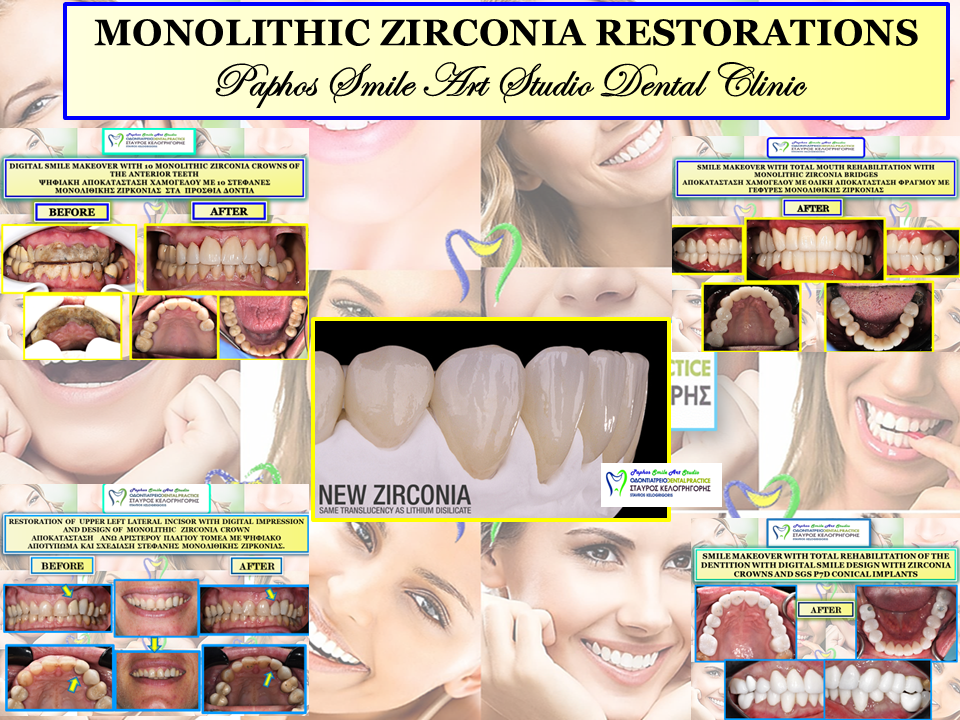
Zirconia Crowns are becoming the dominant material in Dentristry due to their superior esthetical,mechanical properties and their Biocompability.In our Dental Clinic we replaceced the old Porcelain Fused to metal(PFM) crowns and full Metal crowns with the Magnifiscent Zirconia crowns at the same price so as to give our patients the best available solution at a very economical and affortable price!
 What are zirconia crowns?
 |
Your dentist can use zirconia dental crowns to replace a single natural tooth. People need dental crowns for a variety of reasons.
- Tooth decay: When tooth decay progresses to the point where there is very little tooth material left, a zirconia crown can help preserve the tooth’s roots.
- Broken or chipped teeth: Zirconia crowns can be used when a tooth is broken, cracked, or otherwise damaged.
- Aesthetic considerations: Dental crowns help when a tooth is healthy but not as attractive as a patient would like. Discoloration or variations in size can all be corrected with a dental crown.
Zirconia crowns are just one of several materials patients can choose from. Other types of crowns are:
- Porcelain
- Ceramic
- Metal
- A combination
What should I expect during a zirconia crown procedure?
 |
Receiving a zirconia dental crown takes two visits.
On the first visit, your dentist examines your tooth to make sure it can support a crown. They will then prepare the tooth by filing down the tooth material to make a healthy base for the crown.
Once the tooth is prepared, your dentist takes aa digital impression for the lab techinician to design digitally and fabricate the crown. Meanwhile your dentist with fit a temporary crown until the new crown will be fabricated.When the zirconia crown is ready, your dentist removes the temporary crown and permanently affixes the zirconia dental crown with dental cement.
Checking for fit, color match, and shape is the last step. Zirconia dental crowns can be shaped to more closely match natural teeth. Your dentist will make sure that the bite is correct and shape the crown accordingly.
It may take a few days to get used to your new zirconia crown, especially if you had a gap in your smile for a long period of time. In general, most patients report no problems adapting after the first few days, but if you experience discomfort, give your dentist a call to check it out.
What is a zirconia crown made of?
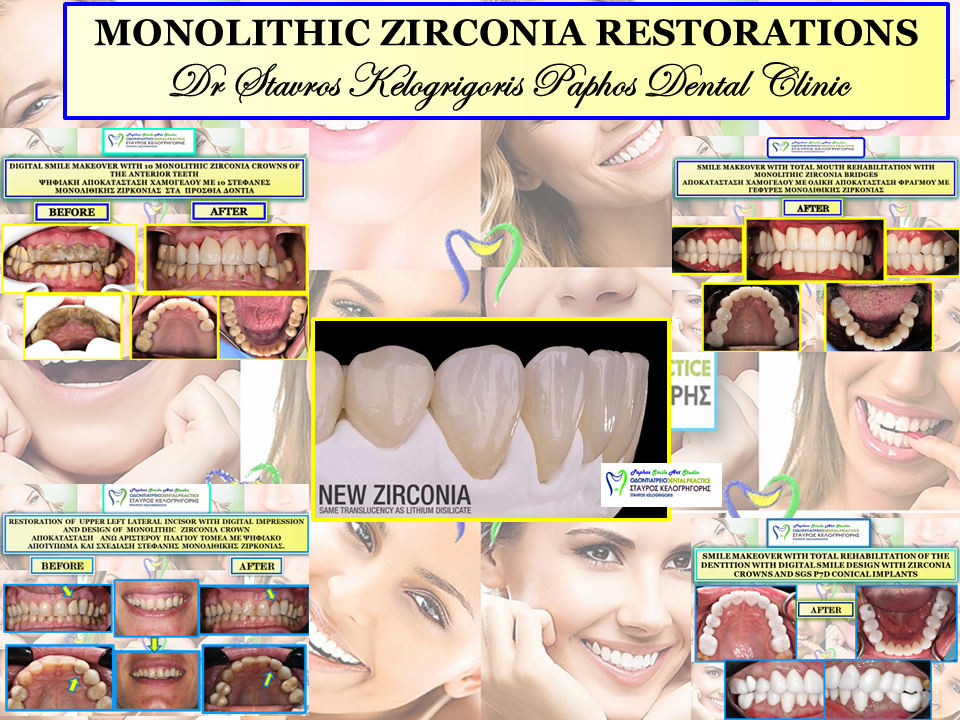 |
Zirconia crowns are made of zirconium oxide. This is a strong material that is compatible with the body. For some patients who cannot tolerate metal, this material is the best option.
Zirconia dental crowns can be either solid or layered.
Solid zirconia crowns (also called monolithic zirconia) are best used on molars. The appearance is more opaque, but the strength of solid zirconia dental crowns is good for hard chewing surfaces. Patients who grind their teeth are also good candidates for this type of zirconia crown.
Layered zirconia crowns are the most natural-looking option. These are easy to match to adjacent teeth and still offer superior strength and durability.Layered zirconia is more translucent and opalescent, but it is especially suitable for anterior crowns, unlike solid zirconia. Although generally used for anterior crowns, layered zirconia may also be used for posterior crowns if there is sufficient clearance. When done skillfully, the very best aesthetic results can be achieved. Both solid and layered zirconia crowns have strength and consistency comparable with traditional PFM restorations, yet they provide far superior aesthetics. Layered zirconia dental crowns need more clearance when they are applied and are generally used for teeth in the front of the mouth.
How long do zirconia crowns last?
With proper care and regular check-ups, zirconia crowns can last a lifetime.
On average, patients expect to get between ten and 20 years of wear out of their zirconia dental crowns, but some report upwards of 30 years of wear.
What are zirconia crowns pros and cons?
When it comes to zirconia crowns pros and cons, they’re best examined by looking at other dental crown materials in comparison.
Zirconia crown vs. porcelain
Zirconia crowns are made of a biocompatible material that virtually eliminates the possibility of an adverse reaction. For some people, the metal lining of a porcelain crown means that the crown can cause irritation and other complications.
The metal lining of a porcelain crown may also peek above the crown right at the gumline. Although it does not matter so much in terms of molars, this dark metal line is not the best look for front teeth. Zirconia crowns are appropriate aesthetically for both front and back teeth.
Some might argue in favor of strong all-metal crowns, but again, this is not necessarily appropriate for front teeth. Most patients will prefer dental crowns that blend seamlessly with their natural teeth, and zirconia dental crowns are the best choice in that regard.
Advantages of zirconia crowns
In terms of strength, durability, and appearance, zirconia dental crowns are superior to other crown materials. Zirconia as a material mimics the appearance of natural teeth, reflecting light in the same way. This means zirconia crowns can be more closely matched to existing teeth.
Zirconium oxide is also up to five times stronger than porcelain or porcelain/metal crowns, which means less chance of cracking, chipping, or breaking at any time over their long lifespan.
Some of the benefits of zirconia crowns are:
They mimic the color of the teeth
. Zirconia crowns are highly biocompatible, as the smooth surface helps to reduce plaque accumulation. Layered zirconia crowns are highly durable. Even though the porcelain used for layering does not have the strength of solid zirconia, they are designed to bond with the zirconium substructure, making chipping or fracturing extremely rare. The material also promotes a healthy tissue response.
They're durable with optional long term durability.
They can be shaped in the dentist's office and need less preparation than other materials preserving more tooth structure, meaning the procedure is much more safe for the long term preservation of your teeth.
Zirconia can be layered with porcelain for an even more tooth-like aesthetic.
These crowns can be bonded or cemented to your tooth, giving your dentist more options for your specific needs.
Zirconia is biocompatible with the underline tissues of the mouth– it won't cause any adverse reactions in your body.Especially when you use it to restore a dental implants thare is a perfect sealing formation of the zirconia crown with the gums achieving a long term stability and protection of the dental implant.
Computer-aided design and manufacturing processes provide patients with a precise fit, thus reducing the chairtime required to adjust and cement these restorations.
Zirconia crowns are comfortable for patients as they do not transmit hot and cold like conventional PFMs.
Zirconia is suitable for patients with metal allergies or who would prefer to have metal-free restorations.
Zirconia is suitable for patients with bruxism that drind their teeth due to their toughness and excellent durability that can withstand very high pressure loading.
225 Comments
Read More
What should I get?
Ultimately, the type of crown you get is a matter of budget, personal preference, and the recommendation of your dentist.
Zirconia crowns fall on the higher end of the dental crown price range because of their durability. Patients need to balance the upfront cost of the crown with the fact that zirconia dental crowns tend to last much longer than porcelain or ceramic crowns. While metal crowns are also quite durable, not everyone wants metal on their front teeth.
The dental crown that you choose should fit your budget and your lifestyle. If you need more information about zirconia dental crowns and want to see what your options are, get in touch with Dr Stavros Kelogrigoris today at 26222693!